Introduction: Why Keyword Search Volume Matters
In the vast digital landscape, where millions of web pages compete for visibility, knowing what people search for is essential. That’s where keyword search volume comes in — it tells you how many times a specific term or phrase is searched for within a given time frame.
Whether you’re building a PBN (Private Blog Network), optimizing your money site, or launching a content marketing campaign, keyword search volume data helps you identify the right opportunities for ranking and traffic growth. In this article, we’ll explore everything about keyword search volume — what it is, how to analyze it, tools to use, and how to leverage it for SEO dominance.
What Is Keyword Search Volume?
Keyword search volume refers to the average number of times a keyword is searched in search engines like Google each month. It’s one of the most fundamental metrics in SEO research and digital marketing.
For example:
- The keyword “best PBN hosting” might have 2,000 searches per month.
- The keyword “PBN backlinks service” might have 500 searches per month.
This difference tells you which keyword has more search demand and traffic potential.
Search volume helps you:
- Estimate potential organic traffic.
- Prioritize content ideas.
- Identify trends and opportunities.
- Balance between competition and visibility.
In short, keyword search volume gives you insight into how popular a keyword is among users, guiding your entire SEO strategy.
How Keyword Search Volume Is Calculated
Search volume isn’t a random number — it’s typically calculated using data collected by search engines or keyword research tools.
These tools analyze:
- Google’s search data.
- Clickstream data (user behavior patterns).
- Historical search trends.
The number you see — for example, “1,000 monthly searches” — is usually an average of the last 12 months, showing how many times users searched that term per month.
Types of Keyword Search Volume Metrics:
- Average Monthly Searches – The average number of searches per month.
- Seasonal Search Volume – Keywords that peak during certain seasons (e.g., “Christmas gifts” in December).
- Trend-Based Volume – Keywords that grow or decline over time (e.g., “AI SEO tools” rising rapidly).
Understanding these variations helps SEOs and PBN builders predict traffic opportunities and plan content calendars effectively.
Why Keyword Search Volume Is Important for SEO
Keyword search volume plays a major role in shaping your SEO and content strategy. Here’s why it matters:
1. Helps in Keyword Prioritization
Not all keywords are equal. Some bring huge traffic but high competition, while others have low competition but limited reach. By analyzing search volume, you can prioritize keywords that strike the perfect balance between difficulty and opportunity.
2. Increases Organic Traffic
Targeting keywords with decent search volume ensures that your pages attract more visitors. When combined with quality backlinks — especially from relevant PBN sites — your rankings and organic traffic improve significantly.
3. Guides Content Creation
Knowing what your audience searches for helps you create highly relevant and engaging content. Articles optimized for high-volume keywords tend to perform better in Google SERPs.
4. Supports Link Building and PBN Strategy
For PBN builders, search volume helps determine which anchor texts to use, which topics to write about, and where to link. This ensures your network drives real value and traffic to your main websites.
How to Find Keyword Search Volume
Finding accurate keyword search volume data requires using reliable tools. Here are some of the most popular ones used by SEO professionals and agencies:
1. Google Keyword Planner
- Free tool available through Google Ads.
- Shows average monthly searches, competition, and CPC data.
- Best for general volume insights but often provides broad ranges (e.g., 1K–10K).
2. Ahrefs Keywords Explorer
- Offers precise search volume estimates and keyword difficulty scores.
- Includes data from Google, YouTube, Amazon, and Bing.
- Helps identify related keywords, SERP features, and traffic potential.
3. SEMrush Keyword Magic Tool
- One of the most detailed tools for keyword research.
- Displays search volume trends, intent analysis, and competitor data.
- Useful for building keyword clusters for topic authority.
4. Ubersuggest
- A beginner-friendly tool showing search volume, SEO difficulty, and content ideas.
- Ideal for small businesses and SEO beginners.
5. Moz Keyword Explorer
- Combines search volume, difficulty, and organic CTR data.
- Offers keyword priority scores for easy decision-making.
6. KeywordTool.io
- Great for long-tail keyword research.
- Uses autocomplete suggestions from multiple search engines.
By using a combination of these tools, you can get a clearer, more accurate picture of search demand.
Understanding Search Volume vs. Keyword Difficulty
It’s important to understand that search volume alone isn’t enough to determine a keyword’s value. A keyword might have high volume but extremely high competition, making it hard to rank for.
That’s where keyword difficulty (KD) comes in — a score that measures how competitive a keyword is based on the strength of the websites currently ranking for it.
| Metric | Description |
| High Search Volume + Low Difficulty | Ideal target (best ROI) |
| High Search Volume + High Difficulty | Harder to rank but good long-term |
| Low Search Volume + Low Difficulty | Easier wins for niche topics |
| Low Search Volume + High Difficulty | Usually not worth targeting |
For PBN marketers, combining both metrics helps you identify easy-to-rank keywords that can quickly bring visibility to new sites.
Keyword Search Volume in PBN SEO
In Private Blog Networks (PBNs), keyword search volume plays a unique role. While traditional SEO focuses on ranking the main site, PBNs are designed to support those rankings through relevant backlinks.
Here’s how keyword search volume fits into a PBN strategy:
1. Choosing the Right Topics for PBN Posts
When creating articles for your PBN sites, select keywords with moderate search volume (500–3,000/month). This ensures that your posts appear natural and attract organic impressions — adding credibility to your PBN.
2. Optimizing Anchor Texts
Anchor texts should be aligned with keywords that have consistent search volume. Over-optimizing with high-volume exact matches can raise red flags, but using LSI (Latent Semantic Indexing) or related keywords helps maintain diversity.
3. Passing Link Equity Naturally
When you target high-volume, relevant keywords within your PBN posts, the link juice passed to your main site looks organic. This boosts authority and ranking consistency.
4. Avoiding Keyword Cannibalization
Using search volume data prevents you from targeting the same keyword across multiple PBN sites, ensuring each domain contributes uniquely to your SEO ecosystem.
How to Analyze and Use Keyword Search Volume Effectively
Keyword search volume is just one piece of the SEO puzzle. Here’s how to analyze and apply it strategically:
Step 1: Group Keywords by Intent
Categorize keywords into:
- Informational (e.g., “what is keyword search volume”)
- Commercial (e.g., “buy PBN backlinks”)
- Transactional (e.g., “order PBN link package”)
Focusing on commercial and transactional keywords often brings the most conversions.
Step 2: Build Keyword Clusters
Instead of targeting one keyword per page, build clusters of related terms. For example:
- Main Keyword: “keyword search volume”
- Cluster Terms: “how to check keyword volume,” “best keyword tools,” “keyword trends 2025”
This helps your page rank for multiple variations and increases topical authority.
Step 3: Analyze Search Trends
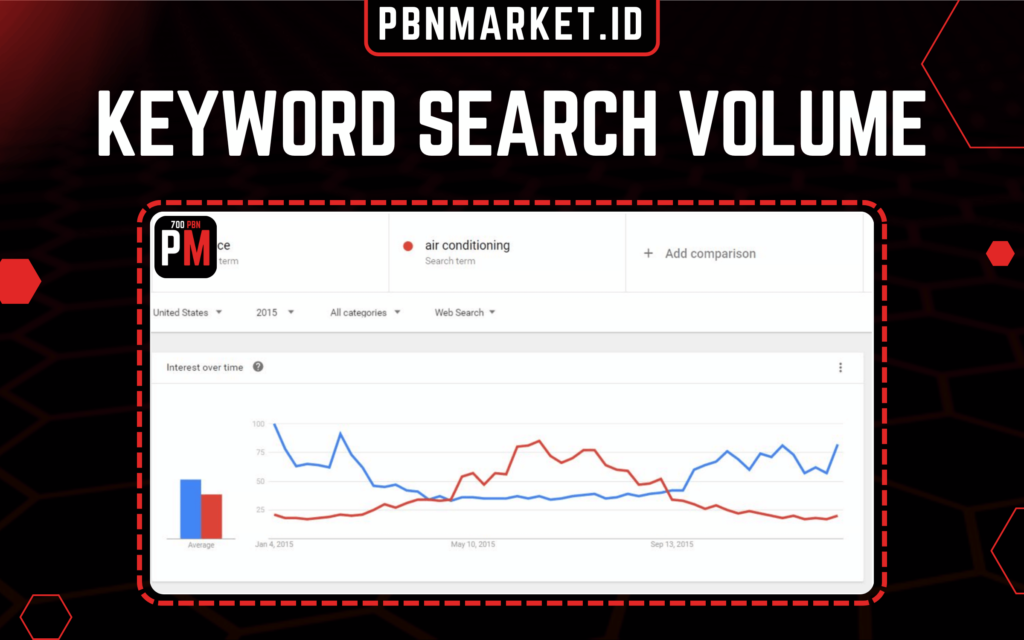
Use Google Trends or Ahrefs to see whether a keyword’s popularity is growing or declining. Focus on evergreen or rising topics for sustainable traffic.
Step 4: Combine Search Volume with CPC and Difficulty
When a keyword has high CPC and steady search volume, it indicates strong commercial intent — a good signal for monetization and link-building opportunities.
Common Mistakes in Interpreting Search Volume
Many beginners make the mistake of misinterpreting search volume data. Here are some pitfalls to avoid:
- Relying on a Single Tool – Each tool uses different data sources; always cross-check numbers.
- Ignoring Search Intent – High search volume doesn’t always mean high-quality traffic.
- Focusing Only on Head Keywords – Long-tail keywords may have lower volume but higher conversion rates.
- Not Considering Location Differences – A keyword might have high volume globally but low volume locally.
- Overlooking Seasonal Changes – Plan around keywords that fluctuate seasonally.
Future of Keyword Search Volume in SEO
With the rise of AI search, voice search, and semantic understanding, keyword search volume is evolving. Google’s algorithms are becoming smarter at understanding user intent rather than just matching keywords.
Emerging Trends:
- Zero-click searches: Featured snippets reduce clicks even for high-volume keywords.
- AI-driven predictions: Tools like ChatGPT and Gemini are improving keyword forecasting.
- Semantic SEO: Optimizing for related terms and entities rather than just volume metrics.
Despite these changes, keyword search volume remains a crucial indicator of audience demand and content potential.
Conclusion: Mastering Keyword Search Volume for SEO Success
Keyword search volume is more than just a number — it’s the foundation of strategic SEO. For PBN-based websites like pbnmarket.id, understanding and leveraging keyword search volume can lead to better rankings, higher traffic, and smarter link-building campaigns.
By combining keyword search volume analysis with relevance, intent, and authority-building through PBNs, you create a sustainable SEO framework that drives long-term success.
Whether you’re researching keywords for your next PBN post or planning your main site’s content roadmap, remember this:
Search volume reveals opportunity — but smart strategy turns it into success.