Introduction:
In today’s hyper-connected world, search engines have become the backbone of digital communication, commerce, and knowledge sharing. Whether it’s Google, Bing, Yahoo, or DuckDuckGo, search engines are the gatekeepers to online information. Every day, billions of users rely on these digital tools to find answers, explore opportunities, and make purchasing decisions. But beyond their convenience, search engine are complex ecosystems powered by algorithms, data analysis, and artificial intelligence (AI). This article explores what search engines are, how they work, why they matter for businesses, and the future of search in an AI-driven world.
What Is a Search Engine?
A search engine is an online software system designed to search for and retrieve information from the World Wide Web. It allows users to enter keywords or phrases and instantly returns relevant results based on complex algorithms.
The most popular search engines include:
- Google: The global leader with over 90% market share.
- Bing: Microsoft’s search engine known for its integration with Windows.
- Yahoo: One of the oldest search engines, still widely used.
- DuckDuckGo: Focuses on user privacy and non-tracking searches.
- Baidu & Yandex: Popular in China and Russia, respectively.
Search engines are not just about displaying links—they organize and rank information in a way that aligns with user intent. They determine which websites appear on the first page and which stay hidden in the digital shadows.
How Search Engines Work
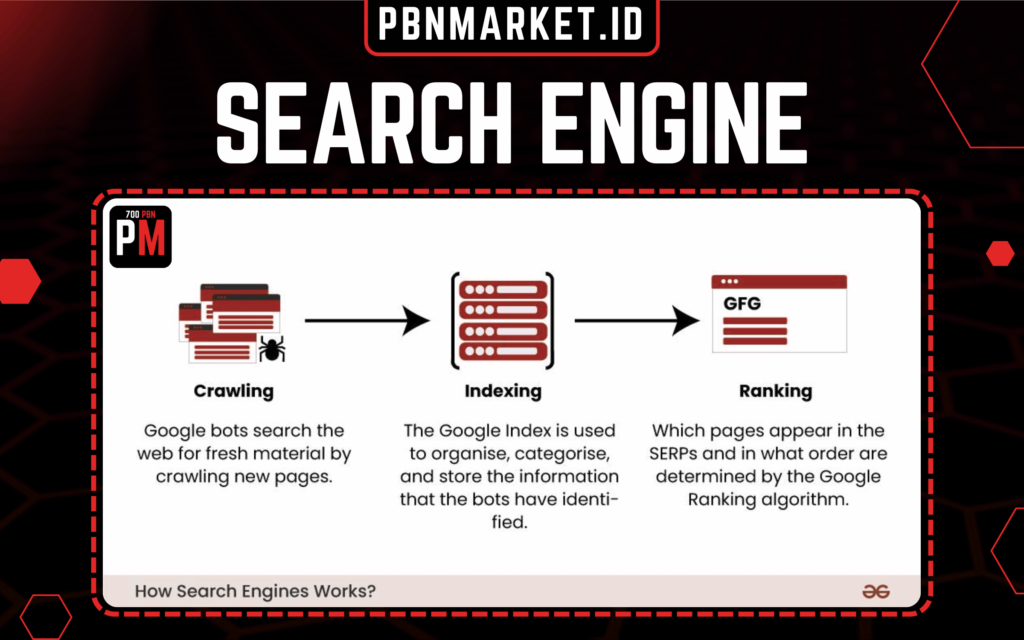
Understanding how search engines work helps businesses and website owners optimize their content for better visibility. The process involves three core stages:
1. Crawling
Crawling is the discovery process. Search engines send out bots (also known as spiders or crawlers) that scan the internet for new or updated pages.
These bots follow links from one page to another, building a massive database of URLs. If a page is not crawlable (due to broken links, blocked access, or missing sitemap), it won’t appear in search results.
2. Indexing
Once pages are crawled, they are indexed. Indexing means storing and organizing the content in the search engine’s database. The index contains billions of web pages sorted according to topics, keywords, and user intent.
For example, when you search for “best smartphones 2025,” the engine doesn’t search the entire web—it retrieves information from its indexed database to provide the most relevant results.
3. Ranking
Ranking is where the magic happens. Search engines use complex algorithms to determine the order in which pages appear in search results.
Factors that influence ranking include:
- Relevance of keywords
- Content quality
- Page speed and mobile friendliness
- Backlinks (other sites linking to your page)
- User experience (UX)
- Domain authority
Google’s algorithm alone considers 200+ ranking factors before displaying results.
The Importance of Search Engines in the Digital Era
Search engines have completely transformed how humans interact with information. In the digital age, visibility equals opportunity.
Here’s why search engines are indispensable:
1. Gateway to Information
Without search engines, navigating the internet would be like finding a needle in a haystack. They simplify access to knowledge, helping users find accurate and relevant data instantly.
2. Driving Business Growth
For businesses, ranking high on search engines means increased traffic, credibility, and revenue. A top Google ranking can generate thousands of visitors without paid advertising.
That’s why Search Engine Optimization (SEO) has become one of the most essential digital marketing strategies globally.
3. Empowering Decision-Making
Users depend on search engines for product reviews, travel choices, medical advice, and financial planning. The data-driven nature of search ensures that users get personalized and data-backed recommendations.
4. Enhancing Online Visibility
Whether it’s a small blog, eCommerce store, or multinational company, search engines provide equal opportunities for visibility—based on merit, relevance, and optimization.
Key Search Engine Optimization (SEO) Strategies
SEO is the process of improving a website’s visibility in search engine results. Without proper SEO, even the best websites remain invisible. Below are key strategies that drive success:
1. Keyword Research
Keywords are the foundation of SEO. They help search engines understand what your content is about.
Use tools like Google Keyword Planner, Ahrefs, or SEMrush to find relevant keywords with high search volume and low competition.
Focus on:
- Short-tail keywords: (e.g., “search engine”) – high volume but competitive
- Long-tail keywords: (e.g., “how search engines work in 2025”) – less volume but highly targeted
2. On-Page Optimization
On-page SEO focuses on improving the elements of your website that affect ranking:
- Title tags and meta descriptions
- Header tags (H1, H2, H3)
- Image optimization (ALT text)
- URL structure
- Internal linking
3. Off-Page Optimization
This involves building authority outside your website through backlinks, brand mentions, and guest posts. High-quality backlinks from reputable websites improve credibility in the eyes of search engines.
4. Technical SEO
Technical SEO ensures that your website can be easily crawled and indexed.
It includes:
- XML sitemaps
- HTTPS encryption
- Page speed optimization
- Mobile responsiveness
- Fixing broken links and errors
5. Content Marketing
Content is still the king. Regularly publishing high-quality, relevant, and engaging content helps attract and retain visitors.
Blog posts, videos, infographics, and podcasts all contribute to a strong SEO strategy.
The Role of Artificial Intelligence in Search Engines
The introduction of Artificial Intelligence (AI) has completely revolutionized how search engines operate. AI allows search engines to understand user intent, not just keywords.
1. Google’s AI Evolution
Google’s RankBrain, BERT, and MUM updates have enabled the engine to interpret context, synonyms, and semantics. Instead of simply matching words, Google now understands meaning and intent.
For example, a search for “best budget smartphones for photography” will yield results that analyze performance, price, and camera quality—not just product names.
2. Voice Search
AI-powered voice assistants like Siri, Alexa, and Google Assistant have introduced conversational search. Users now speak naturally rather than typing, leading to the rise of voice SEO.
Optimizing content for voice queries means focusing on natural language, question-based keywords, and local SEO.
3. Personalized Search
AI analyzes user behavior, search history, and location to provide customized search results. This personalization increases engagement but also poses new challenges for SEO professionals, as rankings vary by user.
Popular Search Engines and Their Differences
While Google dominates globally, each search engine offers unique features:
- Uses advanced AI and machine learning
- Prioritizes user experience and relevance
- Integrates with Google Maps, YouTube, and Gmail
Bing
- Integrates seamlessly with Microsoft products
- Offers strong visual search and rewards users with Bing Rewards
Yahoo
- Focuses on news, email, and finance
- Still used by millions, though powered by Bing’s technology
DuckDuckGo
- Prioritizes privacy and does not track user data
- Popular among users who value anonymity
Baidu
- The top search engine in China
- Optimized for Mandarin and Chinese web regulations
Search Engines and E-commerce
Search engines are the driving force behind e-commerce success. Studies show that over 60% of online purchases start with a search.
Here’s how search engines boost e-commerce:
- Product Visibility: SEO-friendly product listings attract more clicks.
- Local Search Optimization: “Near me” searches help local stores grow.
- Review Integration: Search engines display ratings and feedback directly in results.
- Paid Advertising: Platforms like Google Ads help e-commerce businesses target the right audience instantly.
Businesses that invest in SEO and paid search strategies gain a significant competitive advantage.
Challenges Search Engines Face
Despite their incredible evolution, search engines still encounter several challenges:
- Fake Information: Distinguishing between genuine and false content is a growing issue.
- Privacy Concerns: Users are increasingly aware of data tracking and targeted advertising.
- Algorithm Updates: Frequent changes make SEO unpredictable for businesses.
- Competition from AI Tools: AI chatbots like ChatGPT and Gemini offer direct answers, reducing traditional search traffic.
To stay relevant, search engines are integrating AI-generated responses and maintaining transparency in ranking criteria.
The Future of Search Engines
The future of search engines lies in AI, personalization, and visual search. By 2030, experts predict that search will become more conversational, visual, and immersive.
Emerging trends include:
- Visual and Image Search: Platforms like Pinterest Lens and Google Lens are reshaping how users discover products.
- Augmented Reality (AR): Search engines will soon display AR previews of products or destinations.
- Zero-Click Searches: More answers will appear directly on search results, without requiring users to click.
- Sustainability & Ethics: Search platforms will prioritize energy-efficient operations and responsible AI use.
Businesses that adapt to these evolving trends will stay ahead in the competitive digital marketplace.
Conclusion:
Search engines have evolved from simple data retrieval tools to intelligent systems that understand human intent and behavior. They connect the world, drive economies, and empower decision-making across industries.
For users, they are a daily necessity. For businesses, they are a gateway to visibility and success. As technology advances, the relationship between AI, SEO, and search engine will continue to redefine how we explore information.
In essence, search engines are not just about finding data—they’re about connecting people, ideas, and opportunities across the globe.